The story, in brief
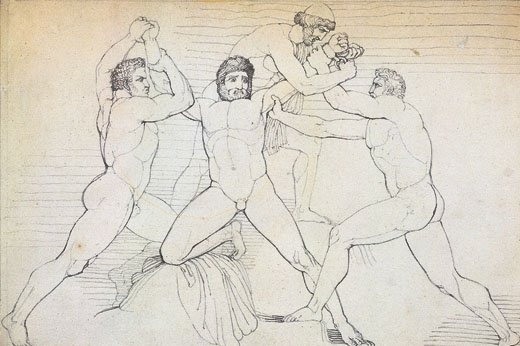
Prometheus, a Titan who sided with Zeus in the war against his own kind, defies him a second time by stealing fire and giving it to humanity after Zeus had deliberately withheld it. As punishment, Zeus has him chained to a remote rock, where an eagle eats his liver each day; it regrows overnight, so the torment never ends. Generations later, Hercules frees him, killing the eagle and breaking the chains, with Zeus's permission.
A Titan on the losing side
Prometheus belongs to the generation of Titans, the children of Gaia and Uranus who ruled the cosmos before the Olympian gods overthrew them in the Titanomachy. Unlike most of his relatives, Prometheus fought on the winning side: he sided with Zeus against the other Titans, which is part of what makes his later punishment at Zeus's hands feel, even within the myth's own internal logic, like a particularly personal betrayal.
His name is usually translated as "forethought," and the myths consistently cast him as the one figure in the Greek pantheon clever enough to see consequences other gods didn't bother to consider; a trait that gets him into trouble as often as it saves him.
The trick with the meat, and the first grudge
Before fire ever enters the story, Hesiod records an earlier conflict: at a feast meant to establish how sacrificial offerings would be divided between gods and mortals forever after, Prometheus tricked Zeus into choosing the inferior portion. He wrapped the good meat in the ox's unappetizing stomach lining and the bones in rich-looking fat, letting Zeus pick based on appearance. Zeus saw through the trick immediately but chose the fat-wrapped bones anyway, deliberately, so he would have a standing grievance to use later. It's a detail that matters for understanding what follows: by the time fire gets withheld, Zeus already has a reason to want Prometheus to lose.
Taking what was deliberately denied
Zeus's response to the meat trick was to withhold fire from humanity entirely: not an incidental hardship, but a calculated punishment aimed at mortals for a dispute that was really between two gods. Prometheus, watching humans shiver and eat raw food as collateral in an argument they had no part in, stole fire from Mount Olympus (commonly described as hidden inside a hollow fennel stalk) and gave it back to them.
In several ancient traditions, this act is paired with Prometheus teaching humanity additional skills needed to actually use fire well: metalworking, cooking, and in some tellings, medicine and writing. The theft of fire isn't presented as a single favor but as the opening move in equipping humanity to survive and build civilization independently of the gods' goodwill.
The punishment, and why it was built to never end
Zeus's retaliation was specifically designed not to kill Prometheus but to make his suffering permanent and inescapable. He was chained to a remote rock (usually located in the Caucasus Mountains in ancient accounts) where an eagle (sent by Zeus) ate his liver each day. Because Prometheus was immortal, the liver regrew by nightfall, and the eagle returned the next day to repeat it, with no natural endpoint.
This detail is often read as the myth's sharpest piece of design: an ordinary punishment ends once it's served; this one was built to be incapable of ending on its own, matching the open-ended nature of the original crime (fire, once given to humanity, could never be taken back either).
How it eventually ends
Most surviving versions have Hercules free Prometheus during the hero's own wandering labors, killing the eagle and breaking the chains. Zeus, notably, allows this; in several accounts because Prometheus possesses a prophecy Zeus needs (concerning which of his future children might overthrow him, echoing the Titan's own uprising generations earlier) and agrees to trade it for his freedom. The myth ends not with Zeus forgiving the original act, but with a transaction that finally makes the punishment worth ending.
Why the Greeks kept telling it
Aeschylus's tragedy Prometheus Bound, written centuries after Hesiod's version, reframes the Titan far more sympathetically: less a punished trickster, more a wronged benefactor who gave humanity civilization and paid for it alone. That shift matters: it shows the Greeks themselves didn't treat this myth as settled. Whether Prometheus was a defiant criminal or a necessary rebel against an arbitrary punishment was an open question worth restaging on stage generations after Hesiod first wrote it down; part of why the story has outlasted most other Titan myths in cultural memory.